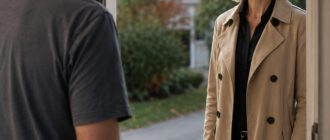
Come Back and Care
– Claire, open up this instant! We know youre in there! Sarah saw the lights on!
I was just finishing tying up a stem of lisianthus to a wooden support, green streaks on my hands from the stems, my apron stained with soil. Glancing up at the glass door of my workshop, I saw two shapes outside. I recognised one immediately, even through the misted glass: broad shoulders, short copper-red dyed hair. Margaret Turner. My ex-mother-in-law.
I didnt hurry. I placed the lisianthus in a bucket of water, took off my gloves, and hung them on the peg by the worktable. Only then did I go to open the door.
Evening, I said, sliding back the bolt.
Margaret bustled in first, invitation be damned. Behind her squeezed Sarah, Victors sister, eyes red and scarf looped carelessly, one end nearly to the floor.
Evening, she says! Are you alright in the head? Margaret’s eyes swept the workshop, pausing on something she could disapprove of. She found it. Fiddling with your precious blooms while a mans dying?
Whos dying? I asked, keeping my tone level.
Vic! Sarah blurted, then covered her mouth as if she wished she could swallow her words. Vic’s in hospital. Crash. Broken back.
I watched them, silent. Inside, something tightenedbut not the way it used to at the mere mention of Victor. Not anymore. It was quieter, wary almost, the sort of bracing you do after youve already been burned.
Sit down, I said, nodding to the stools by the table.
We’ve no time for sitting, Margaret snapped, then sat anyway, heavily. I remembered her bad legsvaricose veins, high blood pressure.
Sarah stayed standing, twisting her scarf.
Go on then, tell me, I said.
They told me, sometimes talking over each other, detail contradicting detail. Three days ago, Victor was driving on the M4. Heavy rain. The car skidded, crashed into the side rail. Wrecked. He survived, but with a compression fracture of the spine. Surgery done, but the doctors are noncommittal. He may walk; he may not. He needs care, the presence of loved ones.
And whats Harriet doing? I asked.
I said the name calmlyit surprised even me. A year ago, just hearing Harriet felt like glass under the skin. Harriet, twenty-eight, a sales manager, the woman Victor left me for after eighteen years of marriage.
Margaret pressed her lips together.
Harriets gone.
Where?
To her mothers. Manchester. Sarah pressed her lips again, this time not from sadness but anger. The moment she heard Vic might never walk, she started packing. Two suitcases in three hours. Weve phoned her but she wont answer.
I said nothing. The only sound was water dripping from a tap above the sink, the room scented with damp earth and the sweet hint of lilies.
So, whats it you want from me? I asked at last.
Margaret straightened up.
Claire, you spent eighteen years together. Thats not nothing. You know him better than anyone. Hell do as you say. He needs you, someone who…
Margaret, I interrupted, youre talking about a man who left me for someone else. Who, a year back, couldnt find room for me in the very life we built over eighteen years.
Oh, come off it! piped up Sarah. The pasts the past. Its about saving a life now!
A life?
The doctor says without constant care, hell get bedsores, chest infections! Hes had surgery, Claire. This isnt a cold!
I went to the tap and shut it off. I stood there, looking at my hands. Fifty-two. Id arranged bouquets people photographed and framed. Id made bread dough, given jabs when our son had a fever, bandaged Victors finger, fixed plugs, carried heavy shopping from the market. My hands knew plenty. Only, Id never much thought whether I wanted to do all that or just did it because thats what women dobecause it was expected, because not to would feel wrong.
I dried my hands and turned back.
Ill think about it, I said.
Theres no time! Margarets voice sharpened, her face taut. While you sit here among your blasted flowers, hes therealone. No wife, no one. Sarah works all hours, and me, I can barely walk! You cant just pretend this isnt your problem!
Whose is it, then? I asked softly.
No answer.
It was dark outside the glass door. October, and night came early. I stared out at the streetlamp, rain-slick pavement, the empty bench where, in summer, customers would wait while I finished their bouquets.
Real life, I thought. Here it is. Not film, not fiction. Two people demanding I act as someone Im no longer willing to be.
All right, I said. Ill come tomorrow, see how hes doing. But Im making no promises.
Margaret sagged with relief. Sarah unexpectedly hugged me. I stood, hands at my side, waiting her out.
Once theyd gone, I sat on the stool Margaret used, staring at my flowerslisianthus in the bucket, pink and delicate; chrysanthemums lined up in wooden boxes; auburn-belled physalis stems. Id made this place myself, rented it three months after Victor left. Painted the walls myself, that greyish-white I liked, and had Mr. Henry from next door hang the cupboard doors in exchange for a decent bottle of wine. Came up with the name The Stem and Leafit sounded naff at first, but it stuck. Found suppliers, learned to photograph arrangements so people actually paused, drawn in by the images.
A year. A year crafting a life of my own. Turns out living for yourself isnt selfishness or indulgence. Its simply normal.
And here I was again.
I switched off the worktable lamp, left only the little nightlight by the door, as always, and went home.
The hospital was a sprawling post-war London block, all endless corridors and that scent I loathedbleach, overcooked vegetables, and some indefinable hospital tang. I found the right ward, asked the nurse.
You family?
Ex-wife, I said.
She arched an eyebrow, but just gave directions.
Victor lay in a four-bed room, the other beds were empty. He kept his arms on top of the blanket, looked thinner, face grey, purple bags under his eyes. By his table: a mug with cold tea and his phone, screen-down.
He saw me. His face shiftednot glad, not sorry, but rested, as if hed been waiting for this.
Claire, he said.
Hello, I replied, setting apples and mineral water on his table. Not for politeness, just that one doesnt visit hospitals empty-handed.
I sat on the chair in the window nook, not at his bedside.
It hurt? I asked.
Bearable. Pills help. He paused. You came.
I did.
Mum said theyd come to see you.
Yes.
He stared at the ceiling, then back at me.
I didnt expect you.
I didnt expect to come.
Silence. The rain brushed the window. Early November, rushing in on autumn.
Harriets left, Victor said.
I know.
So thats it. He gave a sour smile. Right out of a film, isnt it? Thunderclap and the old man repentsbut too late.
I didnt answer. I wasnt here to pity him, but not to finish him off, either. I just watched himthe man whod been in my life for eighteen years, with whom I had a son, with whom Id bickered about money, holidayed every summer in the Lake District, argued and made up and argued again, believing thats just life, no other kind possible.
Claire, he said, his tone softer, familiarhis I want something voice, one I recognised, met with the old wariness. Lying hereIve had time to think. Funny, the things you dwell on when you cant move. I realise I was a fool. What mattered was always you. The home, the family. Harriet… he waved a hand. You know. Im not asking you to forgive meI know its late. But youre the closest I have. The dearest.
He talked, and I felt almost outside myselfhearing his words line up, closest, dearest, I realise, I was a fool, Youre the one. All words designed to persuade me backnot for love, not for something real. Just to make sure someone would be there, change his drips, speak to consultants, ferry over home-cooked food because hospital grub was viledo all that I could do.
Post-divorce relationships, I thought. Often not dramatic, nor horrifyingjust practical. Someone looks you up when things go wrong. Not for love. Out of convenience.
Victor, I said, Im glad youre alive. And that surgery went as it should. But I wont come back. Not to nurse, not for any reason. Were divorced.
I know were div
Let me finish.
He fell silent. He used to always interrupt me. Clearly, this surprised him.
Ill find you a carer. A professional. Ill pay for a month, because youre not in a state to sort it. But thats all I can do. And one more thing. I took a folder from my bag. It took me a while to find it, buried under my purse and diary. The paperwork. We never finished the property split. You always put it off. So did I. But now, please, sign these.
He stared at the folder.
Youre serious.
Absolutely.
Im lying here after spinal surgery and you bring papers?
Yes, I said matter-of-factly. Before you start with not being of sound mind or an overzealous lawyer steps in. Youre compos mentis. The doctor can witness it.
He looked at me, long and hard. I held his gaze.
Youve changed, he said at last.
Yes.
You wouldnt have done this, before.
Perhaps not.
He took the folder and flicked through. I handed him a pen.
At that moment, the doctor enteredmid-forties, tidy hair, hospital badge tucked into his pocket, quiet face, tired in a way you get after years of this job.
Good afternoon, he said, and flashed me a questioning look, polite, not nosy. Im Andrew Graham, responsible for Mr. Turners care.
Claire.
Youre…?
Ex-wife, I repeatedfor the second time that day. Getting used to it.
He nodded, as if that was routine, and turned to Victor.
How was the night, Vic?
All right. Slept.
Good. He scribbled a note. Today well adjust the bed back, see how you tolerate it. Recoverys on track, but its still early days.
Doctor, I said, can I have a word?
We stepped into the corridor. I drew the door to behind us.
Id like to arrange a carer, I said. A professional. Could you write down the requirementsexperience, skills, and if theres any equipment to source?
Andrew considered me closely.
You wont be… doing the caring yourself?
No.
I understand. He paused. Honestly, its the right call. Forgive me, but relatives who nurse out of guilt or obligationwell, it rarely ends well. The patient needs calm, stable care, not drama or tears. Carers are trained for that. Family usually isnt.
I looked at him.
Do you tell everyone that?
Just those who ask, he replied.
I almost smiled. Almost.
Could you jot down whats needed? I took out my phone.
He dictated. I noted it. Then he mentioned there were agencies the hospital worked withthe nurses could give the contacts. I thanked him.
One more thing, he said as I was about to go back, hes got a decent shot at recovery. Not old, operation went fine. Might be walking in six months. No guarantees, mind, and its slow.
I understand, I said.
The main thing is that he does too.
Back in the ward, I found Victor with the folder on his stomach, pen beside him.
Will you sign it? I asked.
He looked at the ceiling.
What if I say I need to think?
Victor.
All right. Ill sign. He took up the pen. Youd only insist, youre like that now.
I always was, I said, I just used to hide it. Not sure why.
He signed in three places. I collected the papers.
Ill get the carer sorted this week, I said. Ill ring Sarah and explain. Ill pay the agency fees for the first month. After that, youre both grown-ups.
Claire, he said as I zipped up my bag.
Yes?
Thank you. For coming.
I looked at him, not with pity, not anger, but a calm assessmentlike you look at something that once was part of your life, but isnt any longer.
Get well, I said.
And left.
I paused at the corridor window. Below: hospital courtyard, bedraggled trees, a bench slick with rain. An older man in a dressing gown sat on it, gazing into the middle distanceat nothing in particular, just breathing in the outside air.
I took a deep breath, too.
Something eased. Not everything, but something essential. As if Id been lugging a heavy bag and finally put it down. Not thrown, not droppedjust set aside and straightened up.
How do you let go of the past? If I kept a diary, thats what Id write. I dont know. But perhaps it isnt a decision or a single actits a thousand tiny steps. Id just taken another.
I found a carer through an agency in two days. Emily, about fifty-eight, experience with rehab and elderly care, brisk but pleasant, folder of references thick as a brick. We met in a café near the hospital. I described the situation; Emily listened closely, asked the right thingsVictors temperament, any depression, pain threshold, how often relatives would drop by.
Family often hinders more than helps, Emily said. Never their fault. It just happens.
I know, I said.
We agreed the terms; I wired the money. Called Sarah, explained. At first, she complained it wasnt a solution, that Vic needed those closest. I cut her off, gently but firmlya new skill for me. I used to never interrupt, or if I did, it was sharp, irritable. Now, it was something elsecalm.
Come visit daily if you want, Sarah. Emily wont mind. But I wont be coming. I have my life. Its not obliged to fit other peoples emergencies.
A pause. Then: Fine.
Just fine. Not another word, no tears. Maybe she was tired as well. Maybe, inside, she realised I was right.
Margaret rang herself a week later. Her voice was gentler, older.
Claire, Emilys a good woman. Vics getting used to her. Thank you for sorting it all.
Youre welcome, Margaret.
Dont be a stranger. Call now and then.
I neither agreed nor refused. Just said goodbye politely and dropped the phone into my apron pocket. I was back in the workshop, as usual. If anyone asked me now, How do you move on? Id say: just keep living. No drama, no fuss. Get up, go to work, do what you love and know. Toxic in-laws and ex-husbands dont disappearthey just stop being the centre of things.
That winter, snow came early for South England. In November, big drifts surprised the city, and I discovered I rather liked winter. I never had beforeor, more to the point, never noticed. Finding out whether you like winter isnt the sort of thing you reflect on after years of Victors complains about cold, his arthritis, his pleading for tea at just such-and-such a time. Now I could look out at the snow and think, beautiful. That was enough.
By December, work picked up. Corporate bouquets, Christmas arrangements. I hired an assistantLucy, twenty-three, part-time uni student, cheerful, quick, a bit forgetful but bright. We worked well. I taught her to see a flower not as a commodity, but as an artists medium. She listened carefully and sometimes dreamed up bouquets so striking, I was honestly surprised.
How do you come up with it all? I asked once.
I just look at the person ordering, shrugged Lucy. And think, what flower would suit them. Or whoevers getting it.
Thats a great approach.
You taught me. You said flowers should be alive.
I didnt recall saying it, but I must have meant it.
January, February. Life ticked on. I signed up for a floristry course. Lucy said I had nothing left to learn. I explained that theres always somethinga new technique, a new inspiration. This was a new sort of reason for me. For years, Id acted not out of interest but because it was requiredor because someone asked.
Living for yourself sounds selfish, uttered aloud. But in reality, its floristry workshops, an evening in the armchair reading without someone moaning about how long you take, a weekend in Winchester just to see old buildings. Because Ive always loved old brickwork, though no one shared that taste before.
In February, Sarah rangVictor was improving. On crutches now. Emily worked methodically, no fuss, no melodrama. I heard it with a sort of pure gladnessunmixed with guilt or bitterness. He was getting better. That was all.
March brought the thaw and first spring bouquet orderstulips, hyacinths, anemones. I loved that shift: when winter bunches with cotton and eucalyptus give way to brash, eager colours.
And in March, he came.
I was wrapping a bouquetyellow and white: daffodils and daisies. The door chimed open; a man entered. I didnt look up right awayI was fussing with ribbon.
Good afternoon, I said.
And to you, came the answer.
His voice. I knew it before I looked upcalm, a little weary, steady.
Andrew Graham, in a dark coat and light scarf, looked around the workshop as though it was a place hed pictured but never seen. No doctors coat, no files under his arm.
You, I said.
Yes, me.
A pauseLucy was in the storeroom, fetching wrapping paper. Just us.
Victor Turner was discharged ten days ago, he said. Convalescing at home. Prognosis is good.
I know, I said. Sarah told me.
He faintly hesitated; then, for the first time, smilednot professionally, but honestly. I wasnt really passing by. I looked up The Stem and Leaf online.
I put the ribbon aside.
Looking to buy flowers?
I am. And something else.
Silence, perfume from the hyacinths and earth.
What would you like? I asked.
He moved to the anemonespurple, scarlet, white with black middles.
These, he said. Threeno, five, if you think thats best.
Odd numbers, I said. Three or five. Who for?
Im not sure yet. He looked at me. Maybe youll have a suggestion.
I selected three, then two moredeep wine red, nearly black.
Fivethese work well as a group.
I wrapped them, my hands sure and practiced: paper, just damp at the base, ribbon.
Claire, he said.
Yes?
Can I be direct? Its the only way I know.
Be direct, I said, not looking up.
Id like to see you. Not at the hospital, not over errands. Just outdinner, theatre, or a walk if thats easier. I know this is a bit abrupt, but I thoughtmaybe adults can be frank, and not pretend its only about buying flowers.
I looked up.
He watched me, without pressurejust open, giving me the space.
How long have you…? I started.
Three monthssince you asked me about carers, in the corridor.
I remembered, bare hospital trees outside that window.
I was still married then, technically.
I know. Thats why I waited.
March was in full swing outside; the snow was nearly gone, sparrows squabbled by the bench, the streetlamp still on from morning though it was bright enough without.
I dont know, I said.
Dont know what?
I dont know how this works. Eighteen years married, a year learning how to be myself again… I really havent a clue.
If Im honest, neither do I, he said. I divorced six years ago. My daughters seventeen, lives with her motherour relationships OK. For ages, I worked just to not think. Then I learned to think again. Then I wondered if it was possible to do more than think.
At that moment Lucy wandered back with the paper, spotted our client, smiled brightly.
Everything alright, Claire? she said.
Ive got this, Lucy.
Lucy retreated, paper in hand, a little too quickly.
I handed Andrew the bouquet.
How much?
One moment, I said.
He waited.
I watched the anemones in his handsdark, velvet petals. Id always liked that anemones looked a little like poppies but more subtle, reserved. They dont shout, but dont try to hide.
A story, I thought suddenly. Id built my life around flowers; this was where Id escaped from pain, and now here it wassomeone entering not with demands or drama, just straightforwardness, holding anemones, waiting for my answer.
All right, I said.
He raised his eyebrows.
All right, in what way?
Theatre. I havent been in ages.
He smiled, genuinely.
Im glad.
Just not tonight. Ive three orders to finish.
Of course. Saturday, if thats better?
Saturday.
I told him the price; he paid, put the change in his pocket, lingering.
Claire, may I askhow long have you worked with flowers?
The shops just over a year old. Flowers, thoughIve done them all my life. Used to be a hobby. Now its my job.
Always good when hobby becomes work.
Yes. Very.
He nodded, balanced the flowers, and headed for the door. He paused.
See you Saturday, Claire.
See you, Andrew.
He smiled.
Just Andrew.
Saturday, Andrew.
The door swung closed. I stood behind the counter, watching him head up the street past the birds still wrangling by the bench, coat and scarf, anemones in hand. He didnt look back.
Lucy reappeared instantly.
Who was that? she asked, barely managing not to sound nosy.
A customer, I said.
A customer who chatted for a quarter-hour?
Lucy.
Yes?
Get those chrysanthemums wrapped for Mrs Evans. Shes collecting at four.
She went off, content to have witnessed something. I picked up my work again; my hands did the usual, loved rituals. Paper, water, the scent of hyacinths.
Saturday. Four days away. Four ordinary daysbusy, with new orders, with Lucys questions, the supplier calling about peony prices. Days no different from any other days in the steady, hard-earned life Id made.
I didnt dwell on Saturday. I worked. But in between, sometimes with the shop quiet and only the flowers for company, I replayed our conversationnot word for word; more tone, presence, the anemones, See you Saturday, Andrew.
Grown-ups, he said, can speak directly.
Maybe we really can.
I didnt know what would happen Saturdayor if either of us would come away wishing for a repeat, or how it would feel to talk about nothing more than ourselves, not the past, not illness, not work. But at least I knew this: it was up to me now. Not Margaret, not Victor, not duty or fear of being alone. Just me.
That was new. Not a dizzying, heady feeling, as in novels. Just solid. Like pavement under your feet after slipping on ice for ages.
On Friday, after closingand once Lucy was offI put a few leftover anemones in a vase on the windowsill by the till. Always something there for myself, not to sell. Just to have.
Looking at them, I repeated what Id said: They do well together, five of them.
And that was true.
I switched off the lights and headed home. Tomorrow was Saturday.
Saturday arrived at eight with a grey sky and the scent of coffee from the machine Id bought six months beforea thing Victor would have found frivolous, too expensive, unnecessary. That word, unnecessaryId lived with it years, letting it crowd out other words. Like why not, I like it, I want to.
I drank my coffee at the window, watching the street: damp rooftops, a pigeon on the cornice, a careful car dodging puddles.
My phone was on the table, with Andrews text, sent an hour prior, not just as I wokecarefully timed, as though hed slept on it first: Morning. Theatres at seven. Shall we grab dinner beforehandor not, whatever you fancy. Andrew.
I read it again. Noticed the Morning without the goodsmiled.
Typed back: Morning. Dinner works. Six?
Sent. Replaced the phone.
Finished my coffee.
The city outside did its thing. Drip from the eaves, a sparrow chasing off the pigeon. London waking to another Saturday, indifferent to our new beginnings, never noticing first steps or small choices. The city goes on.
A ping. Just one word:
Agreed.
I rose, put my cup in the sink. Tied my apronstill eight hours to go, and the shop doesnt open itself. Grabbed my keys.
At the door, I turned back, surveying my little flat: bright, homely, with those same anemones on the windowsill, a few taken home for myself. My flat. My coffee machine. My flowers. My Saturday.
I left.
The door clicked shut, soft, finallike the best sort of closure.
Andrew was waiting outside the cafe when I arrived at twenty to seven. He stood a little aside, looking at his phone, but put it away as soon as he saw me. That dark coat, that scarfflowers left behind.
Evening, he greeted.
Evening, I answered.
We looked at each other, two grown-ups on a damp March street, there by choice. Not from obligation, not through habit, just because wed chosen to.
Well, Andrew said, shall we go in?
We shall, I replied.
And together, we stepped inside.
Lesson learned: Letting go of old obligations creates space for your own decisionsa space where you can choose, maybe for the first time, whats truly worth growing.