Come Back and Care
Clara, open up at once! We know youre in there! Sophie saw the light in your window!
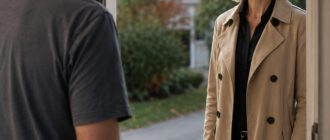
Clara was fixing a stem of lisianthus to a wooden support, her hands flecked green from the stalks, apron streaked with earth. She lifted her head towards the glass door of her workshop. Two figures stood beyond it. She recognised one immediately, even through the steamed-up pane: broad-shouldered, hair dyed too-bright copper. Jeanette Warner. Her ex-mother-in-law.
Clara didnt rush. She placed the lisianthus in a bucket of water, slipped off her gloves, and hung them on the nail by her workbench. Then, at last, she went to let them in.
Evening, she said, sliding back the bolt.
Jeanette Warner strode inside first, not bothering to wait for an invitation. Behind her squeezed in Sophie, Victors sister, her eyes swollen from crying, her scarf thrown on in a hasty, careless knot.
Good, you call this? snapped Jeanette, scanning Claras workshop as if seeking something to criticise. She found it: Sniffing your flowers while someones dying!
Whos dying? Clara asked, her voice calm.
Victor! Sophie blurted out, instantly clapping her hand over her mouth. Victors in hospital. Car crash. His back.
Clara stared at them, silent. Somewhere deep inside her, something contracted, but not as it would have a year ago at the mere mention of Victors name. It was a quieter hurt, wary, like someone burnt once and now instinctively keeps away from the fire.
Sit down, she said, nodding at two stools by the bench.
Not time for sitting, Jeanette retorted, but nonetheless dropped her weight onto a stool. Her legs never were strong; Clara remembered the varicose veins, the high blood pressure.
Sophie stood twisting the end of her scarf.
Tell me properly, Clara asked.
And they began: interrupting, contradicting each other on little details. Three days ago Victor had been driving down the motorway. It was raining. The car skidded, hit the barrier. Complete write-off. He survived. Fractured spine, compressed. Had the operation, but the doctors wont make promises. He might walk again, he might not. He needed care. He needed family nearby.
What about Karen? Clara asked.
The name came out steady, surprising even herself. Last year it would have been like splinters under the skin. Karentwenty-eight, sales managerthe woman Victor left Clara for after eighteen years of marriage.
Jeanettes lips thinned.
Karens gone, said Sophie.
Gone where?
To her mums in Coventry. Sophie scowled. As soon as it looked like Victor mightnt walk, she was off to her mum, packed two cases in three hours, wont answer our calls.
Clara fell silent. The only sound in the workshop was a dripping tap over the sink, carrying a chill of damp earth and sweetness of lilies.
What are you hoping for from me? she asked at last.
Jeanette straightened up on her stool.
Clara, you were together all those years. Eighteen years! You know him better than anyone. You know how to deal with him. He listens to you. He needs someone now who
Jeanette, Clara cut in, youre talking about the man who left me for someone else. The man, who, after eighteen years, didnt find any room for me in the life we built together.
Lets not go over the past! Sophie broke in. This is about someones life!
Someones life?
The doctor said he cant manage alone! Could get sores, pneumonia! Spinal surgery, Clara, do you get that? This isnt a cold!
Clara walked over and tightened the tap. Stared down at her hands. Fifty-two years old. These hands could make bouquets that people framed photos of. They could knead dough, give a jab when her son was running a fever, bandage Victors cut fingers, fix sockets, haul heavy bags from the market. All these years, Clara never really asked herself if she wanted to or just did what she was supposed to, because thats what everyone did.
She dried her hands and turned.
Ill think about it, she said.
No time for dithering! Jeanette heaved herself up from the stool, sturdier now, her voice steely, almost threatening. While youre here with your flowers, hes alone there! No wife, nobody! Sophie works all hours, I can hardly walk! You cant just pretend this isnt your concern!
Whose concern is it, then? Clara murmured.
There was no answer.
It was dark beyond the glass doors. Late October, the night falling quickly. Clara watched the street: the yellow light in front, rain on the pavement, the empty bench where, in summer, customers would sometimes wait while she finished a bouquet.
A story from life, she thought. No film, no book. Just two people asking you to become someone youre not anymore.
All right, she said. Ill come tomorrow and see how he is. But Im making no promises.
Jeanette exhaled. Sophie suddenly hugged Clara, who stood awkwardly, arms at her sides, patiently waiting for Sophie to let go.
When they left, Clara sat a long time on the stool Jeanette had vacated. She looked at her flowerssoft pink lisianthus in the bucket, chrysanthemums in old wooden crates lining the wall, the orange globes of physalis stems. She had created this haven with her own hands, found this space three months after Victor left, redid the place herself, painting the walls the pearl-grey she liked, with the cabinet doors hung by her neighbour Gary, paid in good claret. Shed named it Stems and Petalsit sounded silly at first, but it stuck. She found suppliers, built a website, learnt to photograph flowers so that people paused over the image and kept looking.
A year. A year she spent building a life for herself. Living for yourself, she realised, isnt selfish or indulgent. Its just normal.
And now, here they were.
She stood, switched off the big lamp over her bench, leaving just the small porch light as usual, and set off for home.
The hospital was large and institutional, endless corridors with that unmistakable smell Clara hated: bleach, bland food, and something you only ever found in hospitals. She found his ward, asked the nurse on duty. The nurse eyed her.
Are you family?
Ex-wife, Clara replied.
The nurse cocked an eyebrow, but only said, Down that way, end of corridor.
Victor was in a four-bed bay, but the other beds were empty. He lay with the covers up to his chest, hands over the duvet, thinner than she remembered, face grey, shadows under his eyes. On the locker, a half-full mug of cold tea and his phone face down.
He saw her and something shifted in his face. Not happymore like relief, that he had waited and now she was here.
Clara, he said.
Hello. She put down a bag of apples and sparkling water, not out of any great concernjust knowing you dont arrive empty-handed to hospital.
She didnt sit on the beds edge. She took the chair by the window.
Hurt much? she asked.
Manageable Theyve got me on tablets. Silence. You came.
I did.
Mum rang. Said she and Sophie came to see you.
They did.
He stared at the ceiling, then at her again. Didnt think youd come.
Didnt think so myself, to be honest.
Silence. Rain pattered against the windows. November was fast overtaking October now, in a hurry.
Karens left, said Victor.
I know.
So thats that. He tried to smile, but it was twisted, joyless. Like one of those films. Something happens, and the mans suddenly sorrybut too late, isnt it?
Clara said nothing. She didnt intend to offer sympathy, but nor was she about to twist the knife. She simply watched himthe man shed spent eighteen years with, had a son with, gone to the same seaside village every summer with, argued over money, made up again, then argued once more, believing this was life, the only way there was and ever could be.
Clara, he said, voice softer, returned to the tone he used when he wanted something. She recognised it instantly, tense and wary. Ive done a lot of thinking, lying here. Funny, you get plenty of time for that when you cant get out of bed. I was an idiot. The only real thing I had was you. The house, the family Karen He waved dismissively. You understand. Im not asking forgivenessits much too late for that. But youre the nearest I have to family. The closest to home.
Clara listened, but she heard his words from outside herself, as if observing from afar: The closest. The nearest. I was a fool. Only you. All phrases to persuade her. Not out of love, nor to rebuild what was real. But because he wanted someone to come, change his drip, talk to the doctors, bring in food from home because the hospital food was ghastly. Someone to do what Clara always did.
Life after divorce, she thought. This is what it sometimes looks like. Not grand, not tragic. Just real. Someone finds you when things go wrong. Not because they love you. But because its convenient.
Victor, she said, Im glad youre alive. I mean that. And that the surgery went well. But I wont come back. Not as a nurse. Not any way. We are divorced.
I know were divorced
Let me finish.
He fell silent, surprisedshed always let him interrupt before, hadnt she?
Ill arrange a carer. A good, professional one. Ill pay for the first monthI doubt youre able to deal with this just yet. Thats all Ill do. And one more thing. She fished a folder from her bag, searching among her purse and notebook. These are the property papers. We still havent finished dividing things up. You kept putting it off, I never chaseddidnt want to deal with it again. But Id like you to sign them now.
Victor stared at the folder.
Are you serious?
Completely.
Im lying here, just had spinal surgery, and you bring me paperwork?
Yes, Clara replied. Because tomorrow you could claim you werent in your right mind. Or your lawyer will say you were coerced. I know how it goes. Right now you’re alert, stablethe doctor can confirm it.
He stared at her a long time. She didnt look away.
Youve changed, he said.
Yes.
You wouldnt have done this before.
Maybe not.
He took the folder, flicked through the pages. Clara handed him a pen.
Just then the doctor walked ina short man of about forty-five, grey scrub top, clutching a bundle of case notes under his arm. His face was calm, a little tired, like a man long since past pretending to be cheery.
Good afternoon, he said, with a querying but polite look at Clara. Dr Andrew Miles, Victors consultant.
Clara, she replied.
Youre?
Ex-wife, she said againthe second time today, she realised, becoming used to the phrase.
Dr Miles nodded, untroubled by it, and turned to Victor.
How was your night, Mr Warner?
Fine. Slept.
Excellent. The doctor made a note. Today well try to raise the head of the bed, check your tolerance. Too soon for firm expectations, but youre on track.
Doctor, Clara said, Could I have a moment?
They stepped outside. Clara shut the door behind them.
I want to arrange a professional carer, she said. Please tell me what experience or qualifications to look for, and if any additional equipment is needed.
He regarded her steadily.
Youre not planning to provide care yourself?
No.
I see. He paused. That really is for the best, honestly. Dont take offence, but family looking after someone from guilt or duty is its own story. What a patient needs is calm, practical carea carer knows how to provide that. Family members usually dont.
Clara asked, Do you tell everyone that?
Only when they ask, he smiled.
She almost smiled too. Almost.
Please make me a list, she said, getting out her phone.
He dictated. She typed. He directed her to agencies the hospital worked with, told her to ask the nurse at the desk for contacts. Clara thanked him.
Ill add, he said as she started to head back, Victors got every chance of recovery. Hes not old, the operation went smoothly. With luck, walking again in six months. No guarantees, but theres hope.
I understand, Clara said.
It matters most that he does, too.
Back in the bay, Victor was holding the folder on his chest, pen nearby.
Will you sign? she asked.
He watched the ceiling.
What if I say I want to think?
Victor
All right, Ill sign. He picked up the pen. Youll get your way nowyouve changed.
I always was like this, said Clara. Just used to hide it. Not sure why, really.
He signedthree places, just as needed. Clara put away the documents.
Ill sort the carer within this week, she said. Ill call Sophie, explain. The first months payment Ill transfer directly. After that, youll have to sort it yourselves.
Clara, he said, as she zipped up her bag.
What?
Thank you. For coming.
She looked at him. Not with anger, and certainly not pity. Just as you look at something that was once part of your life, and is no longer.
Get well, she said.
And left.
In the corridor, she paused by a window. Beyond the glass: a small courtyard, a few bare linden trees, a bench glistening with rain. An elderly man in hospital slippers sat there, staring into the distance, though nothing much was there to see. Just breathing the outdoor air.
Clara took a deep breath herself.
Something eased. Not all, but something important. As if a heavy bag youd been hauling for miles was finally set downgently, not flung, but properly let go, letting your back straighten.
How to let go of the past, shed have written, if she kept a diary. I dont know. But perhaps it never happens in a single moment or with one grand choice. Its lots of small steps. And today, she took one of them.
In two days, Clara found a carer through an agency. A woman of about fifty-eight, Margaret, with long experience in rehabilitation, composed, practical, a folder thick with references. They met for coffee near the hospital. Margaret listened with focus, asked the right questionsabout Victors temperament, propensity for gloom, pain threshold, what family could be expected.
Family members often hinder more than help, Margaret said. Not to blame them, just how it is sometimes.
I know, Clara replied.
They agreed terms. Clara sent payment. She rang Sophie, explained. Sophie started to protestVictor wants to see family, not a stranger!but Clara stopped her, gently but firmly, a tone she herself found novel. Previously shed either never interrupted, or interrupted only out of exasperation. Now, it was level, peaceful.
Sophie, you can visit every day if you want. Margaret wont get in your way. But I wont be coming. I have my own life now, and its not required to adjust around someone elses crisis.
Sophie was quiet for a beat, then said:
All right.
Just all right. No extra accusations, no tears. Perhaps she too was tired. Or maybe, somewhere deep down, she understood Clara was right.
Jeanette rang herself a week later. Her tone was differentsofter, older, none of the edge it had held in the workshop.
Margarets good, Clara. Victors warming to her. Thank you for arranging all that.
Youre welcome, Jeanette.
Dont vanish altogether, will you? At least ring now and then.
Clara made no promisejust bade farewell and tucked her phone away. She was standing in the workshop, as usual. If anyone asked her now how you let go of the past, shed have said: you just get on with your life. Not as a martyr, not as a drama. Just as you are: wake up, go to work, do what youre good at and love. Difficult relatives and ex-husbands dont vanish, but they stop occupying the centre of your life.
Winter set in early that year. Snow in Novemberand, to her surprise, Clara found she rather liked it. She never had before, or perhaps had simply never thought about it, caught up as shed been in Victors perpetual grumbling about cold, his arthritis, waiting on his orders for hot tea at precisely the right time. Now she could stand at the window, watch the falling snow and think: Its beautiful. And that was enough.
December brought more ordersbouquets for Christmas, festive displays. Clara hired an assistant, a bright, scatterbrained twenty-three-year-old called Emily, who was keen and full of ideas. They worked well as a team. Clara taught her not to see a flower as a product, but as an artist sees paint. Emily listened, and sometimes came up with bouquet ideas so striking they left Clara genuinely impressed.
How do you come up with these? Clara asked one day.
I just look at whos ordering, Emily shrugged. Try to guess which flower matches them, or whoever its for.
Thats a good approach.
You taught me, really! You said bouquets should have life to them.
Clara didnt recall saying quite that, but supposed she must havebecause she believed it.
January, then February, life ticking along. Clara enrolled on a floristry course; Emily said she hardly needed to, but Clara explained you can always learn, not for lack of skill but for interests sake. That was new to her. Always before shed done things because she must, or at someones request.
Living for yourself sounds selfish when said aloud. But in truth its escapades like: an evening class, an undisturbed night reading because there are no complaints about reading too long, or a day trip to see old architecture you always loved, though no one ever cared to go but you.
In February, Sophie called. Victor was recovering. Hed graduated to crutches. Margaret was diligent and cheerful. Clara was glad to hear it and, for once, there was no guilt or sorrow in itjust plain glad for someone elses recovery. Thats all.
March brought the early rush for spring bouquets: tulips, hyacinths, anemones. Clara loved this shiftwhen wintry arrangements with cotton and eucalyptus gave way to bold bursts of colour, lively and impatient.
That was when he appeared.
Clara was tying up a daffodil and daisy bouquet, all in fresh yellow and white, when the door opened. She didnt look up at first, her hands busy with ribbon.
Good afternoon, she called.
Good afternoon, came the reply.
The voiceshe recognised it before she looked. Calm, gently tired, unhurried.
Dr Andrew Miles stood at the entrance, surveying her workshop with a curious gaze, as if it was a place hed seen in his minds eye first. He was minus the scrubs, in a navy coat, light scarf, no case notes, thankfully.
You, said Clara.
Me, he agreed.
A beat. Emily had popped next door for wrapping paper. They were alone.
Victors out ten days now, Andrew said. Recovering well with the same carer. Things are looking up.
I knowSophie emailed.
Right. He seemed to lose his words for a second, then, with a genuine smile, said, To be honest, I didnt just come by by chance. I looked up Stems and Petals and found your address.
Clara set aside the ribbon.
Buying flowers?
Yes. And more, if possible.
The air smelt sweet, of hyacinth and fresh soil.
What exactly would you like? Clara asked.
He wandered to the rack of anemones, their deep purples and reds.
TheseIll take three Or five, which is best?
Odd numbers, Clara advised. Three or five, yes. Who for?
Not sure yet. Maybe you can help decide.
Clara picked three, added two near-black burgundy ones.
Five, she said. They hold together nicely.
She wrapped them. The motion came easy; brown paper, moist at the base, tied with a slim bit of ribbon.
Clara, said Andrew.
Yes?
May I be direct? I dont know how else to be.
Go on, she said, still working on the bouquet.
Id like to meet you. Not for anything medical or officialjust to go out. Theatre, if youre fond, or a coffee, or a walk, if you dont like closed spaces. I know it might seem odd. But were both grown-ups. I didnt want to pretend I was just here for flowers.
Clara lifted her head.
He looked backopenly, gently. The way you do when saying something important and giving the other person space to decide.
How long have you been thinking this? she asked.
Three months since that corridor chat, actually, when you asked about the carer.
She remembered the corridor. Hospital windows, bare trees.
I was technically married then, still.
I know. So I waited.
March pressed against the glass doors; snow nearly gone barring grey strips by the road. Sparrows bickered near the bench. The streetlight glowed, unneeded now.
Im not sure, Clara said.
Not sure about what?
How this works. I was married eighteen years, let go of the past just this past year, learnt how to be alone. I just dont know how.
Honestly, neither do I, Andrew replied. I got divorced six years ago. Seventeen-year-old daughter, lives with her mum, were on good terms. At first I just worked all the time. Then started thinking. Nowthought, maybe, it wasnt too late to do more than just think.
Emily returned with the paper, saw Andrew, flashed a smile.
Miss Clarke, you want help?
No, love, Im fine.
Emily vanished again, eager to avoid whatever shed stumbled on.
Clara handed Andrew the bouquet. He took it, admiring the dark anemones.
How much?
One moment, she said.
He waited.
Clara studied the anemones in his hands: velvet petalled, deep burgundy, a flower that didnt shout but never quite hid either.
A story of flowers, she thought. All this time shed built her new life around flowers. Shed fled here to escape pain. It made a home for her. Here now, someone new enterednot barged in or demanded space, but simply asked, directly, anemones in hand, awaiting her answer.
All right, she said.
He raised his brows.
All right as in?
The theatre. Ive not been in ages.
Andrew smiled, genuinely this time.
Im glad.
Just not tonightIve three more orders before closing.
Of course. Friday then? Or Saturday if thats easier.
Saturday, Clara agreed.
She named her price. He paid, put the change in his pocket, lingered.
Clara, can I ask how long have you been a florist?
The shop just over a year. Flowers, though my whole life. Once a hobbynow a job.
Nice, when hobbies become work.
Yes. It is.
He nodded, carried the bouquet toward the door, paused.
See you Saturday, Clara.
See you Saturday, Andrew.
He gave a small grin.
Just Andrew.
See you then, Andrew.
The door closed. Clara watched him walk awaypast the bench, past the squabbling sparrows, those anemones in his hands. He didnt look back.
Emily appeared almost instantly.
Miss Clarke, who was that? she tried for nonchalance, failing badly.
A customer, said Clara.
A customer you talked with for fifteen minutes?
Emily.
Yes?
Go wrap those chrysanthemums for Mrs Foster, will you? Shell be here at four.
Emily left, delighted at having witnessed a scene. Clara busied herself againfamiliar, sure-handed, surrounded by the gentle rattle of brown paper, the drip of water, the scent of hyacinths.
Saturday. Four days away. Four ordinary days, filled with orders, deliveries, Emilys questions and a call from a wholesaler about peonies. Unremarkable, untroubled days in a year she had painstakingly reclaimed.
Clara didnt linger on Saturday in advance. She just worked. Sometimes, in rare quiet moments among the buckets and blooms, she thought briefly of their talknot word for word, just in fragments: the calm voice, anemones in hand, see you Saturday, Andrew.
Grown-ups can speak plainly, hed said.
Maybe they can.
She didnt know what would happen Saturdayif theyd like each other, if conversation would flow about more than illness or the past. She didnt know if shed want to see him again. She only knew the decision belonged to her, and her alone. Not her former mother-in-law, not Victor, not guilt or fear or dutyher.
It was an unfamiliar feeling. Not intoxicating, not dizzyingjust solid. Like stepping off ice and feeling firm tarmac beneath your feet.
Friday evening, with the shop closed and Emily gone, Clara set five leftover anemones in a vase beside the till, her spot for flowers only for herself, not for sale.
She regarded them.
They hold well together, she’d said about those five.
That was true.
She turned off the lights and went home. Tomorrow was Saturday.
Saturday dawned, grey, the scent of coffee filling her flat, brewed by the machine shed bought six months agoa purchase Victor would never have approved (dear and pointless hed have said, one of those phrases that creeps into marriage like bindweed, choking out the words you mean: Why?, I want to, I like it, I will). She sipped coffee by the window, watched the rooftops. A pigeon landed opposite. A car skirted a puddle.
Her phone lay on the table. A message, received an hour ago, as if someone had thought it through, plucked up courage, and finally pressed send:
Morning. Curtains at 7. Grab a bite first? Or notup to you. Andrew.
Clara re-read it, smiled at Morning missing its good.
She typed her reply: Lets eatsix?
Sent. Put her phone down.
Drank her coffee.
March fiddled away outsidethe drip from the eaves, the wind, a sparrow shooing off the pigeon. The city woke up, heedless of anyones beginnings, or first steps, or small victories. It just went on.
Her phone pinged: one word in return
Agreed.
Clara stood, washed up, donned her aproneight hours yet till evening, and the shop wouldnt open itself. She picked up her keys.
At the door, she looked back at her small, light flat, anemones in a tumbler by the windowones shed taken home for herself. Her flat. Her coffee. Her flowers. Her Saturday.
She left.
The door clicked quietly behind her. Just as doors should, when theyre shut properly.
Andrew was already waiting by the café when she arrived at twenty to seven, drawn off to one side, scrolling through his phone but slipping it away the instant he saw her. The same navy coat, the same scarf, no flowers this time.
Evening, he said.
Evening, she replied.
They looked at one anotherjust for a couple of seconds. Two adults, on a damp March evening, there of their own accord. Not because it was expected, or because there was no choice. Simply because they wanted to be there.
Well then, Andrew said, smiling. Shall we go in?
Lets, Clara replied.
And so, they went.
In life, there are moments when you must choose yourself and take responsibility for your own happinessno one else has the right or duty to do it for you. And when you finally do, you discover the strength to let go, to heal, and to start anew, stronger and kinder than before.