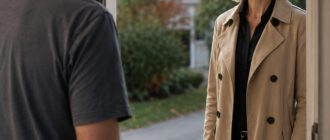
Come Back and Take Care
Kate, open up immediately! We know youre in there! Sophie saw the lights on!
Kate was finishing tying a pink lisianthus stem to a wooden support. Her hands were streaked with green, her apron stained with soil. She paused, looked towards the frosted glass door of her flower workshop. Two silhouettes waited just beyond it. She recognised one of them instantly, despite the steamed-up glass. Broad shoulders, dyed hair the colour of overripe cherries. Margaret Smith. Her ex-mother-in-law.
No need to rush. Kate placed the lisianthus in a bucket of water, peeled off her gloves, hung them on the little hook by her workbench. Then she went and slid the bolt.
Evening, she said as she opened the door.
Margaret Smith stormed in without so much as a nod. Sophie pushed in behind herVictors sister, eyes red from crying, her scarf knotted carelessly, one end trailing.
Evening? Kate, have you lost your senses? Margarets eyes swept across the shop, hunting for something to judge. She found it. Youve time for posies while a man lies dying.
Whos dying? Kate kept her voice calm.
Victor! Sophie burst out, then clamped her hand over her mouth. Hes in hospital. A crash. Hes broken his back.
Kate held their gaze. Something inside her tightened, but not like it had a year agonot the chasm that once opened at the mention of Victors name. Now it was quieter, more cautiousa recoiling of someone burnt before, wary of another singeing.
Sit, she said, nodding towards the pair of stools by the table.
We havent time to sit, huffed Margaretthen sat anyway, groaning as her poor legs bent. Kate remembered: varicose veins, high blood pressure.
Sophie stayed standing, twisting her scarf.
Tell me clearly, Kate requested.
And they did. In turns, interrupting and contradicting, painting the picture: Three days ago, Victor was driving on the motorway. It rained hard. The car skidded, smashed into the barriera wreck. He survived, but his back was broken. Compression fracture. The surgery was done, but the doctors were guarded. He might walk, he might not. He needed care, needed family.
And what about Julia? Kate asked.
Even saying her name surprised hera name that, a year before, had been a sliver of glass under the skin. Julia, twenty-eight, account manager, the woman for whom Victor walked out after eighteen years of marriage.
Margaret pressed her lips together.
Julias left.
Gone where?
To her mums. Manchester. As soon as she heard he might never walk again, she packed two suitcases in three hours and hopped the next train. She wont answer our calls.
Kate was silent. The workshop was hushed now, only the sound of water dripping from an unfinished tap in the sink, the air thick with damp earth and lilies.
What do you want from me? she asked at last.
Margaret drew herself up. Kate, you were together for eighteen years. Eighteen! No one knows him like you. You know how to look after him. He listens to you. He needs someone now, someone who
Margaret, interrupted Kate. Were talking about a man who walked out on me for another woman. A man who, a year agoafter eighteen yearscouldnt find room for me in the life we built.
Sophie jumped in, Thats all in the past! Right now, its about someones life!
Life?
The doctor said without someone there, hell get pressure sores, pneumonia! Kate, do you even understandthis isnt the sniffles!
Kate walked over to the sink and turned off the tap. She stood a moment, staring at her hands. Fifty-two. These hands could make bouquets people snapped for their mantelpieces. They mixed dough, gave injections when their sons fever hit forty, bandaged Victors fingers, fixed sockets, lugged home shopping bags. Theyd done everything. And not once, in all those years, had Kate stopped to wonder if she wanted toif she did it because she chose, or just because it had to be done, and who else if not her?
She wiped her hands on a towel and turned.
Ill think about it.
Theres nothing to think about! Margaret got up, her voice hardening to something almost threatening. While youre here with your flowers, hes alone! No wifenobody! Sophies at work all hours, my backs gone, I can barely walk! You cant just sit here pretending this isnt your business!
Whose business is it, then? Kate asked softly.
No answer.
It was pitch-dark outside now. October. Early dusk. Kate looked beyond the glass dooryellow streetlamp, gleaming tarmac, an empty bench by the kerb, the one where, in summer, customers would perch waiting for their bouquets to be finished.
A slice of real life, she thought. Not a film, not a novel. Two people stand before you, insisting you revert to someone youre no longer willing to be.
All right, she said. Ill come in the morning and see him. But Im not promising anything.
Margaret heaved a sigh. Sophie flung her arms around Kate; she stood there, arms limp, waiting as Sophie clung on, then finally let go.
After theyd gone, Kate sat for a long time on the same stool Margaret had used. Staring at the flowerslisianthus in the bucket, pink and tender, buds curled like secret letters; rows of chrysanthemums in wooden crates, sprigs of winterberry. This space was hersshed taken the lease three months after Victor left. Painted it herselfall greys and whites to her likingthe cabinet doors hung by Mr Watson from next door in exchange for a decent bottle of Shiraz. Thought up the name The Stem, which made her smile at first, but stuck in the end. Found suppliers, launched her website, learnt to photograph her bouquets so people wanted to see more, not just scroll by.
A year. A year shed spent building a life that was hers. Living for yourself, it turned out, wasnt selfish. It was just normal.
And now this.
She turned off the light over the worktable, leaving just the little night lamp by the door, as always. And walked home.
The hospital was a great, draughty block from the seventies, with cold corridors and the unmistakable hospital blendbleach, cheap food, something else you only ever smelled in hospitals. She found the right ward, asked the nurse at the desk for directions. The woman glanced up, appraising.
Family?
Ex-wife, Kate replied.
A flick of the eyebrow, but the nurse just pointed the way.
Victor lay in a bay with four bedsthree empty. A blanket up to his chest, arms on top, face pale and thin, dark hollows beneath his eyes. By the bed: a glass half-full of tepid tea and his phone, face-down.
He saw her and his expression changednot joy. More a settling, as if hed expected her and shed finally arrived.
Kate, he murmured.
Hi. She set a carrier bag on his cabinetapples and mineral water. Not out of affection, but because you dont visit hospital empty-handed.
She didnt sit beside him. She took a seat by the window.
Are you in pain? she asked.
Its bearable. The drugs help. Pause. You came.
I came.
Mum calledsaid theyd been round to yours.
Yeah.
He stared at the ceiling, then back at her.
I didnt think you would.
I didnt think I would, either.
Silence. Rain brushed the pane. November hurrying to catch up with October.
Julias gone, Victor muttered.
I know.
Thats that, then. He tried to smile, but it came out twisted and hollow. Like a film, isnt it? Sudden tragedy and the bloke prays for a miracle. Only its a bit late for that.
Kate said nothing. She wouldnt scold, wouldnt pity. Just sat, taking in this man with whom shed spent eighteen years, raised a son, holidayed in the same cottage every summer, rowed about money, made up again, and honestly believed this was what life wasa constant cycle, nothing out of the ordinary.
Kate, he began, his tone gentlerthe one he always used when he wanted something. She recognised it immediately, her guard rising out of habit. You do a lot of thinking, flat on your back. I realise, now, I was a fool. That youour familywere all that mattered. Julia He trailed off with a shrug. You know how it is. Im not asking for forgiveness. I know its too late. But youre the closest I have. The dearest.
Kate listened, hearing the words as if from a distance. The dearest. The closest. I was a fool. Youre the one. All lines, designed to reel her back in. Not for love. For convenience. Someone to swap his drips, ask questions of the doctors, bring edible food, do the things Kate did well.
Divorcethis is what it looks like, she thought. Not tragic, not cinematic. Just a reckoning: a person finds you, when everything is lost, not for love, but because its easy.
Victor, she said quietly, Im glad youre alive. Honestly. And that the surgerys gone well. But I wont come back. Not as a nurse, or anything else. Were divorced.
I know, but
Let me finish.
He stopped. Surprised, perhaps, because shed always let him interrupt before. Not this time.
Ill arrange a proper nurse. A professional. Ill cover their wages for a monthyou cant sort that yourself right now. But thats all Im willing to do. And one last thing. She took a folder from her bagwith difficulty, as it was wedged behind her wallet and diary. These are the papers. Weve never finalised the settlement. You kept stalling. So did I, truthfully. But nowI need you to sign.
Victor stared at the folder.
Youre serious.
Completely.
Im lying here after major surgery and you bring me legal papers.
Yes. Because if I wait, youll say you were too frail, or your solicitor will claim undue pressure. Right now youre compos mentis. The doctor can confirm it.
He watched her in silence. She met his gaze and did not look away.
Youve changed, he said at last.
Yes.
You could never have done this before.
Perhaps.
He took the folder, leafed through. Kate passed him a pen.
Just then the door swung open and in walked the doctora compact man in his mid-forties, grey coat, clutching a stack of charts. He looked calm, a touch weary, as though cheer had long since become a luxury.
Afternoon, he said, glancing at Kate with polite curiosity. Im Andrew Clark, the consultant.
Kate, she replied.
Youre?
Ex-wife, she repeated. Her new normal. She was getting used to it.
Andrew nodded, as if this was nothing at all, then turned to Victor. How was the night?
All right. Slept.
Good. He scribbled in the notes. Well try raising the head of the bed today, see how that goes. Still too soon to predict, but youre doing well so far.
Doctorcould I have a word? Kate asked, following him into the corridor.
Id like to arrange a nurse. Professional. What experience do you advise? What equipment would be needed?
He looked her in the eye.
You wont be doing it yourself?
No.
I see. He paused. In truth, thats usually for the best. Please dont take it personally, but family carers motivated by guilt or obligation are another whole category. The patient needs steady care, not rows, no drama in the night. A good nurse knows that. Family mostly dont.
Kate studied him.
Do you always say that?
Only when asked, he said.
She almost smiled.
Write down whats needed. She took out her phone.
He dictated. She noted everything. There were even agencies linked to the hospital; the nurse at reception would know. Kate thanked him.
One more thing, he added as she was about to return, his prognosis isnt bad. Hes not old, the surgery was clean. Maybe in six months hell walk. No guarantee, but its possible.
I understand, Kate said.
As long as he does, too.
Back in the bay, Victor held the folder against his chest, pen beside it.
Will you sign? she asked.
He looked at the ceiling.
What if I want time to think?
Victor.
All right. Ill sign. Youd get your way whatever happens, these days.
I always did, really, said Kate. I just hid it before. Not sure why.
He signedall three pages, where indicated.
Ill have the nurse sorted by weeks end, she said, sliding the papers away. Ill call Sophie, explain. Ill pay the agency direct for the first month. After that, youll sort it yourselves.
Kate he called, as she snapped her bag shut.
What?
Thank you. For coming.
She looked at him for a long moment. Without pity. Without anger. Just looking, as you might at something that was once your own life, but isnt any longer.
Get well, she said, and left.
She stopped by the window in the corridor. Outside, the hospital courtyardbare trees, a rain-soaked bench. An old man in a dressing gown sat there, staring at nothing, just breathing in the cold outdoor air.
Kate breathed in, too.
Something lifted. Not everything. But something vital, as if shed carried a heavy bag for miles and could finally set it downnot toss it aside, just set it firmly on the ground. And stand up straight.
How do you let go of the past? shed jot in a diary if she kept one. I dont know. Some things change in tiny steps. Today was one.
She found a nurse through an agency in two daysa woman called Gillian, forty-eight, experienced in geriatrics and rehabilitation, calm, businesslike, with a folder of references. Kate met her near the hospital, explained. Gillian listened, asked the right questions: Does the patient get moody? Is he easily depressed? Hows his pain tolerance? Will family drop in?
Family sometimes make it worse without meaning to, Gillian said.
I know, Kate replied.
They agreed terms, Kate paid. She called Sophie, who blustered at first that it wasnt the same, that Victor wanted his own kin. But Kate gently cut in, firm but measureda discovery for her, this new kind of directness. Previously, shed either stayed silent, or snapped in frustration. Now: calm.
Soph, you can visit every day if you like. Gillian wont mind. But I wont be coming. Ive got my own life, and it cant keep waiting on someone elses needs.
Sophie was silent, then managed a simple: All right.
Just thatall right. No added reproach, no tears. Maybe she, too, was bone-tired. Maybe she knew, deep down, Kate was right.
A week later, Margaret phoned herself. Her voice different nowgentler, older.
Kate, Gillians wonderful. Victors settling down. Thank you for what youve done, she said.
Youre welcome, Margaret.
Dont be a stranger. Call sometimes, will you?
Kate neither agreed nor refused. She just said a polite goodbye and pocketed her phone, standing among her flowers, where she belonged. If someone asked now how to let go of the past, shed say: you just get on with living. Not heroically, not showily. Justlive. Get up, work, do what you love. Toxic relatives and ex-husbands dont vanish from life, but they stop being at the centre.
That winter came early. By November, the streets were blanketed. And Kate realised, to her surprise, that she liked it. Shed never cared for winter beforein truth, shed never paused to consider it. Victor hated the cold, always moaned about arthritis, demanded tea at a fixed hour. Now she was free to sit and notice snowfall and think: its beautiful.
By December, business was booming. Corporate bouquets, gifts, Christmas centrepieces. Kate hired an assistant, a girl called Emilytwenty-three, cheerful and fast, scatterbrained but willing. They worked well together. Kate taught her to see flowers not simply as stock, but as an artists palette. Emily took it in, sometimes dreaming up bouquet ideas that truly surprised Kate.
How do you come up with them? she asked once.
I just look at whoevers ordering, Emily shrugged. Try to match the flowers to themor who theyre giving it to.
Thats a good method.
You taught me! You said bouquets should be alive.
Kate didnt recall saying thatbut perhaps she had. Its what she believed.
January. February. Life hummed on. Kate signed up for an advanced floristry course. Emily said there was nothing left for her to learn. But Kate insisted: Theres always something to learnnot because I have to, but because I want to. A new feeling. She used to do things only from necessity, never just because they sparked her interest.
Living for yourself sounds selfish in theory. But really, it looks like this: floristry courses; an evening in an armchair with a book and no one tutting that she reads too long; a weekend trip to Cambridge just to look at old architecture, because shes always loved it, though no one else ever cared.
In February, Sophie calledVictor was slowly improving. Using crutches now. Gillian worked with methodical care, no fuss. Kate was genuinely pleased to hear it. Not relief, not guiltjust happiness for him. Nothing more.
March brought the thaw and the first orders for spring bouquetstulips, hyacinths, anemones. Kate adored the shift: the wintery whites yielding to this bold, insistent brightness.
And it was in March that he came.
Kate was at her worktable, packing a yellow-and-white arrangementdaffs and daisies, plain but joyous. The door opened and a man stepped in. She didnt look up straight awayher hands still busy with ribbon.
Afternoon, she called.
Afternoon, he replied.
The voice. She knew it before she looked up. Calm, a little tired, assured.
Andrew Clark stood just inside, gazing around as if hed pictured the shop in his mind already. No lab coat todayjust a dark overcoat and soft scarf. No charts.
You, said Kate.
Me, he smiled.
A pause. Emily was in the back for some packing paper. They were alone.
Victor was discharged ten days ago, Andrew said. Home care, same nurse. Hes coming along well.
I know. Sophie texted.
Good. He hesitated, only a fraction, but Kate noticed. Actually, I didnt just happen by. To be honest He gave a sudden, genuine grinnothing forced about itI came here deliberately. I remembered the nameThe Stem. Found the address online.
Kate let the ribbon drop.
Looking to buy flowers?
Yes. And not just that.
Silence. The fragrance of hyacinths and new earth filled the air.
What do you have in mind? asked Kate.
He moved to the anemonesviolet, deep crimson, white with jet-centres.
These, I think. Three, maybe fivedoes it matter?
Odd numbersthree, or five. Who are they for?
Im not sure yet. He looked at her. Maybe youll help decide.
Kate picked out three, then another two, those velvety dark ones.
Five. They look best together.
She wrapped them, hands sure and steadybrown paper, a little damp at the base, a neat ribbon.
Kate, Andrew said quietly.
Yes?
Hope you dont mind if I speak plainly. Im not one for waffle.
Please do, she said, not raising her eyes from the blooms.
Id like to see you outside of here. Not in hospital, not to do with Victor or paperwork. For coffee, or a play, if you like that. Walk in the park, even. I know it might seem odd, butwell, were both adults. Why pretend I only came for flowers?
Kate looked up.
He met her gazesteady, unhurriedleaving her space to decide.
How long have you thought about this? she asked.
About three months. Back in the corridor, when you took notes for finding a nurse.
Kate remembered: that window, bare branches.
I was still, technically, married then.
I know. So I waited.
Outside, March was in full swing. The last of the snow had meltedjust a few grey patches by the kerb. House sparrows squabbled by the bench. The lamp, still burning even though the daylight was enough.
I dont know, Kate said.
What dont you know?
I dont know how any of this works. Eighteen years married, then a year learning to be just myself. I dont know what happens now.
Truth be told, nor do I, he said. I had a divorce six years ago. Daughter, seventeen, with her mum, we get on. I threw myself into workkept busy, stopped thinkingthen worked out maybe I dont want to just get by anymore.
Emily returned with wrapping paper, spotted them and grinned.
Need help, Mrs Carter?
No, Emily, Ive got it, thanks.
Emily vanished again, probably keen to gossip later.
Kate handed Andrew the bouquet.
How much?
Wait, she said.
He did.
Kate watched the anemones in his handsdeep, velvety, restrained. She always liked them for their quiet beautynever shouting, never hiding either.
A story of flowers, she thought. Shed woven her new life around blooms, grown roots here after all that pain. Now here came someoneno drama, no demandsjust honesty, holding anemones, waiting for her word.
All right, she said.
He lifted an eyebrow.
All right, how?
A play. I havent been to the theatre in years.
Andrew smiled genuinely. Delighted.
Not tonight, though. Three orders before closing.
Of course. Friday, or Saturday if you prefer?
Saturday, said Kate.
She told him the price. He paid, pocketed the change, lingered a moment.
Kate, can I askhow long have you been working with flowers?
The shops a little over a year. Flowersmy whole life, really. Started as a hobby. Now its work.
Nice when your hobbys your work.
Yes, she agreed. It is.
He nodded, arranged the stems, moved towards the door. Paused.
See you Saturday, Kate.
Saturday, Andrew.
He grinned. Just Andrew.
Saturday then, Andrew.
He left. Kate watched from the counter as he strode past the bench, past the sparrows, his overcoat, his scarf, his anemones. He didnt look back.
Emily appeared at once.
Who was that? she asked, feigning casual interest and failing.
A customer, said Kate.
Who just spent fifteen minutes chatting?
Emily.
What?
Go wrap those chrysanthemums for Mrs Harris. Shell be here at four.
Emily left, satisfied shed witnessed something exciting. Kate went back to workher hands nimbly doing old, loved things. Brown paper rustled, water trickled into buckets, hyacinths scented the air.
Saturday. Four days away. Four ordinary days: more orders, deliveries, Emily with her questions, a call from the supplier about peony prices. Four completely usual daysof a newsworthy, hard-won, peaceful year.
Kate didnt dwell on Saturday. She just worked. Sometimes, with no one else in the shop, just the flowers in their buckets, she found herself thinking of the conversationnot the details, just the memory: that steady voice, anemones in hand, see you Saturday, Andrew.
Hed said grown-ups can speak plainly.
Maybe, after all, they can.
She didnt know if it would go well, or if theyd have anything to talk about beyond pain, business, or the past. She didnt know if shed want to see him again. Didnt know anything except this: for the first time, the choice was hers. Not Margaret, not Victor, not guilt, not fear. Hers.
It felt new. Not dizzying or intoxicating, as in novels. Just solid, like earth beneath your boots after miles of snow.
On Friday night, after closing, with Emily gone, Kate put the last of the deep anemones into a vase on the windowsill by the tillalways a flower or two kept just for herself, not for sale, without reason.
They look good together, she recalled saying of the five.
It was true.
She switched off the lights and left for home. Tomorrow was Saturday.
Saturday dawned grey and dull, the air thick with the smell of coffee from a machine Kate had bought for herself six months ago. Victor would never have allowed it: too expensive, pointless. Pointless, shed learned, was one of those words that grew in a marriage like weeds in a garden. You get used to themso much that you stop noticing how they choke out other words. Like: Why not? I want to. I like it. I will.
She drank her coffee by the window, watched a pigeon on the next sill, a car hugging the kerb, careful not to spray the puddles.
Her phone buzzed with a message, sent an hour agotimed like someone awake early, hesitating, then pressing send.
Morning. Curtain at seven. Perhaps we could grab a bite first? Or notup to you. Andrew.
She read it again. Noticed Morning missing its good. She smiled.
She typed: Morning. A bite sounds good. Six?
Sent it. Put her phone back.
Finished her coffee.
March carried on its work. Water dripped off the eaves, a sparrow chased the pigeon from the sill. The city woke up, indifferent to peoples Saturdays, to first steps and small decisions. Cities rarely notice when people choose something important. They just go on.
Her phone flashed. One word:
Perfect.
Kate stood, washed her mug. Put on her apronit was still eight hours to go, and the shop wouldnt open itself. She took her keys.
She paused in the doorway, looking back at her flat. Small, bright, anemones in a tumbler on the silla few shed taken home yesterday, just because. Her flat. Her coffee maker. Her anemones. Her Saturday.
She left.
The door closed softly behind hershutting over what was truly finished.
Andrew was already waiting by the cafetwenty minutes to seven. Standing a little to the side, glancing down at his phone but putting it away as soon as he saw her. Coat, familiar scarf, no flowers tonight.
Evening, he greeted.
Evening, Kate replied.
They looked at each other. Just two grown-ups on a damp March streethere because theyd chosen, not because they must, or couldnt do otherwise. Simply because they wanted to.
Well then, Andrew said, shall we go in?
Lets. Kate smiled.
And in they went.