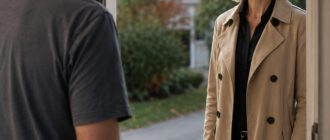
Come Back and Care
“Claire, open the door this instant! We know youre in there! Lucy saw the light in your window!”
Claire was just tying the last stem of a lisianthus to a wooden support, her hands streaked green from the stems, her apron muddy from the potting soil. She looked up at the glass door of her little studio. Two blurred figures stood outside. She spotted one right awayeven through the steamed-over glass. Broad shouldered, with hair dyed that shade of overripe cherry shed never seen in nature. Margaret Benson. Her ex-mother-in-law.
Claire didnt rush. She slid the lisianthus into a bucket, pulled off her gloves, hung them on a nail by the workbench. Then, eventually, she went to let them in.
“Evening,” she said as she slid back the bolt.
Margaret strode in, not bothering with formalities. Lucy, Claires ex-sister-in-law, followed, eyes red-rimmed, scarf wrapped round her neck at odd angles.
“Evening, is it, Claire? Are you quite alright in the head?” Margarets gaze swept the little studio, clearly searching for something to judge. And found it, of course: “Sniffing your flowers while someones dying.”
“Whos dying?” Claire asked, steady as you like.
“James!” Lucy wailed, clapping a hand over her mouth. “Hes in hospital. Crash. His spine.”
Claire looked at them. And somewhere inside, something tightenedbut not the way it used to, when the very mention of James would send her heart reeling. No, it was quieter now. Like an animal thats been burnt once and knows not to get too close again.
“Sit down,” she said, nodding towards two stools by her worktable.
“Weve no time to sit,” Margaret snapped, but she lowered herself down anyway, heavy-legged. Claire remembered her legs werent goodvaricose veins, blood pressure. Lucy hovered, fiddling with the end of her scarf.
“Tell me properly,” Claire asked.
And they didinterrupting each other, arguing over the details. Three days earlier, James was driving down the motorway. It was pelting with rain, he lost control, smacked straight into the barrier. The car? Write-off. James survivedbut with a cracked spine, doctors cautious, not sure hell ever walk again. Surgery done, but now he needs proper care and someone familiar at hand.
“And what about Emily?” Claire asked, the name surprisingly painless to say. Only last year, the name had felt like a splinter under her skin. Emily, twenty-eight, sales manager, the reason James left after eighteen years of marriage.
Margaret pressed her lips together.
“Emilys gone.”
“Gone where?”
“Home. To Oxford. Soon as she heard he might not walk, she packed up and boltedtwo suitcases in under three hours. Wont answer our calls.”
The silence was heavy; the only sound was a leaking tap, the damp scent of soil and lilies in the air.
“So, what do you want from me?” Claire said at last.
Margaret straightened on her stool. “Claire, you were together eighteen years. That means something. You know him better than anyone. You know what he needs. He listens to you. He needs someone who”
“Margaret,” Claire cut in, “Youre asking me about a man who left me for someone else. The same man who, only a year ago, couldnt find room for me in the life we built for all those years.”
“Dont talk like that,” Lucy broke in. “Thats all ancient history. This is life and death!”
“Is it?”
“Doctor says hell get complications if someone doesnt care for himbedsores, pneumonia! This isnt just a cold, Claire, he had spinal surgery!”
Claire walked to the sink, shut off the running tap, stood staring at her hands. Fifty-two. These hands had crafted bouquets people framed in photographs, made dough and cleaned cuts, carried heavy shopping bags, fixed fuses, nursed their boy through feverish nights. All this time, Claire had never really stopped to wonder if she wanted to do any of it, or if she just did it because thats what was done. Because you simply had to.
She dried her hands and turned.
“Ill think about it,” she said.
“Theres no time for thinking!” Margaret got up, voice hardening. “While youre pottering around with your flowers, hes all alone! No wife, nobody! Lucy works all hours, my backs gone, I can barely walk. You cant just sit here and pretend its not your responsibility!”
“But is it?” Claire asked quietly.
No one answered.
Outside the glass door, it was already dark. Octobernights came early now. Claire stared out at the streetlamp, the wet pavement, the empty bench outside the studio, the one her customers sometimes waited on in summer.
Life stories, Claire thought. This, then, is what they really look likenot a film, not a book. Two people standing before you, demanding you become someone you dont want to be again.
“Alright,” she said, “Ill come tomorrow morning to see him. But Im not promising anything.”
Margaret exhaled sharply. Lucy suddenly rushed forward to hug Claire, who simply stood still, arms by her sides, patiently waiting until Lucy let go.
When theyd gone, Claire sat where Margaret had been. She looked around at her flowerspink, delicate lisianthus in their bucket, chrysanthemums along the wall, bright orange physalis stems. Shed made this place herself. Shed taken on the lease three months after James walked out. Did all the painting herselfwell, mostly; local landlord Harry had fitted the cupboard doors in exchange for a good bottle of wine. She came up with the name Little Stemit sounded daft at first, but then it stuck. She found suppliers, set up a page online, learnt how to photograph the flowers so people would linger a bit longer on her pictures.
A whole year building a life for herself. Living for herself, she realised, wasnt selfish or indulgentjust normal.
And now look.
She stood up, flicked off the work light, left only the little lamp burning by the door. Then she headed home.
The hospital was a big, impersonal place, all endless corridors and that unmistakable hospital smellbleach, overcooked cabbage, something unnameable that only hospitals ever have. Claire found the right ward, checked with the nurse at the desk.
“Are you a relative?” the nurse asked.
“Ex-wife,” Claire replied.
The nurse raised an eyebrow but explained how to find the right room.
James was lying in a four-bed bay, the only patient there. The covers were pulled up to his waist; his hands rested on top. He looked thinner, face greyish, shadows deep under his eyes. On his bedside table stood a mug of cold tea, his phone facedown.
He saw Claire and there was a flickernot happiness, exactly, but something calmer, as if hed expected and resigned himself to this.
“Claire,” he said.
“Hello,” she replied, setting down a bag of apples and bottled water. Not because she felt the need to be kindjust because no one visits a hospital empty-handed.
She sat, not on the bed, but on a chair by the window.
“Much pain?” she asked.
“Its bearable. They give me pills.” He was quiet. “You came.”
“I came.”
“Mum rang. She said theyd been round to see you.”
“They did.”
He looked at the ceiling, then back at her.
“I thought you wouldnt come.”
“I wasnt sure myself.”
Silence. The November rain rustled outside, hurrying on.
“Emilys left,” James said at last.
“I know.”
“So thats that.” He gave a lopsided, humourless smile. “Just like in the films. Mans in troubleeveryone bails. Only too late.”
Claire held her tongue. She wasnt here to pity himshe wasnt here to twist the knife, either. Just sitting, looking at the man shed lived almost twenty years of her life withraised a son with, holidayed every summer at a rundown caravan park with, argued over bills and made up again, thinking that was what life was. That there was no other kind of life.
“Claire,” he said, gentler now, his voice soft in that way she recognisedwhen he wanted something. She was on guard, instinctively. “Ive had a lot of time to think. Lying here, you cant do much else. And Ive realised I was a fool. That the only real thing I ever had was you. Home, familyall of it. Emily well, you know. Im not after forgiveness. I know its too late. But youre the only real person I have. The only one who matters.”
Claire listened, hearing those words as if from a distance. Most important. The closest. I understand. I was a fool. Youre the only one. She saw them line up like soldiers. These werent words for old wounds. They were words to get her to agreenot for her own sake, not to start againbut so that someone would come, change the drip, argue with the doctors, bring home cooked food when hospital food was grim. Take care of him because thats what Claire knew how to do.
After divorce, sometimes it went like this. Not romantic, not tragicjust practical. Hed found her again because it was easy. Because it suited him.
“James,” she said, “Im glad you survived. Really. Im glad the surgery went well. But Im not coming back. Not to look after you. Not for anything. Were divorced.”
“I know, but”
“Let me finish.”
He stopped. Used to her always letting him talk over her. Now, for once, he was surprised.
“Ill find you a nurse. A good one. Ill pay the first month myself, since you probably cant arrange that yet. Thats all Im willing to do. One more thing”she rummaged in her bag for a folder, struggling a bit as it was stuck between her purse and diary. “Here are the papers. We never sorted out the house and the rest. You dragged it out, I never pressed, because I didnt want all that fuss. But I need you to sign them now.”
James looked at the folder.
“Youre serious.”
“Completely.”
“Im fresh out of surgery, and you bring me legal forms?”
“Yes,” Claire said. “Because tomorrow youll say you were unwell or that a solicitor told you your signature was under duress. I know the routine. Right now youre fine. Coherent. The doctor can confirm.”
He looked at her a long time. She did not look away.
“Youve changed,” he said finally.
“I have.”
“Youd have never done this before.”
“Probably not.”
He skimmed the papers. Claire handed him a biro.
At that moment, the door opened and in came a doctora short man in his mid-forties, grey coat, records tucked under his arm, the tired, steady look of someone whos done this for years and doesnt bother acting chipper.
“Good afternoon,” he said, glancing at Claire. Curious, but polite. “Im Dr. Andrew Miles, your consultant.”
“Claire,” she replied.
“Youre?”
“Ex-wife,” she said, for the second time that day. Getting used to the words.
Dr Miles nodded courteously and turned back to James.
“James, how was your night?”
“Alright. Slept.”
“Good.” The doctor made some notes. “Today well try raising the top of the bed more, see how it goes. Too early for solid predictions, but youre doing well so far.”
“Doctor,” Claire said, “Could I have a quick word?”
They stepped into the corridor. Claire closed the door quietly behind them.
“Id like to arrange a carer,” she said. “A professional. Can you tell me what skills and experience theyll need? Any particular equipment we need to buy?”
The doctor looked at her, measuring.
“You wont be doing the caring yourself?”
“No.”
“I see.” He paused. “Honestly, thats for the best. Dont take offence, but when family step in out of guilt, it rarely helps. Patient needs calm, reliable help. Not tears and drama. A trained carer is the right call.”
Claire looked at him.
“Do you say that to everyone?”
“Only to those who ask,” he replied with a slight smile.
She smiled backnearly, anyway.
“Could you jot down whats needed?” She pulled out her phone.
He listed things; she typed. He mentioned agencies the hospital worked withshe thanked him.
“One more thing,” he added as she turned to go. “Hes got a fair shot at recovery. Not old, surgery went well. With luck, hell walk in six months or so. But no certainties. Wont be quick.”
“I understand,” Claire said.
“Main thing isdoes he?”
Back in the ward, James was holding the folder on his chest, closed. The pen lay beside him.
“Will you sign?” she asked.
He stared at the ceiling.
“What if I say I want to think it over?”
“James.”
“Alright, Ill sign. You always get your way now, dont you? Youve changed.”
“Ive always been this way,” Claire answered. “I just used to hide it. For reasons I dont even know.”
He signed in the right places. Claire gathered the papers into the folder.
“Ill find a carer by the end of the week,” she said. “Ill phone Lucy and explain. Ill pay the agency for the first month. After thatyoull have to sort it yourselves.”
“Claire,” he said, as she zipped up her bag.
“What?”
“Thank you. For coming.”
She looked at him for a long moment. Not with pity, not with anger. Just as youd look at something that once belonged to you, but no longer did.
“Get better,” she said, and left.
Out in the corridor, she paused by the window. The hospital courtyard was dull, trees almost bare, benches wet from rain. An old man in pyjamas sat on one, gazing into the distanceat nothing in particular, really. Just breathing the cold air.
Claire took a deep breath.
Something lifted. Not everything. But something important. Like finally setting down a bag youve carried too long; not dropping it carelessly, but setting it down on purpose. Straightening your back at last.
How to let go of the past, she might have written in a diary if shed kept one. I dont know. But its not a momentits lots of little choices. Today was one of them.
Claire found a carer through an agency within two days: Barbara, fifty-eight, experienced in elderly and rehab care, steady, sensible, with more references than you could shake a stick at. They met at a café near the hospital. Claire explained everything. Barbara asked the right questions about Jamess moods, pain, depression, how the family would be involved.
“Relatives often do more harm than good, unintentionally,” Barbara commented. “Just how it is sometimes.”
“I know,” Claire agreed.
They arranged everything. Claire paid the money, rang Lucy to explain. Lucy at first protested: that James wanted family, not strangersbut Claire interrupted, gentle but firm in a way that surprised even herself. Shed always either just given in or snapped. Now, something in between: calm.
“Lucy, you can visit every day if you want. Barbara wont mind. But I wont be coming again. I have my own life, and it doesnt have to be rearranged for someone elses emergencies.”
Lucy was quiet, then just said, “Alright.”
Just “alright.” No blame, no drama. Maybe she was tired too. Maybe, deep down, she understood.
Margaret phoned a week later herselfher voice changed, softer, older.
“Claire, Barbaras very good, James is getting used to her. Thank you for sorting it all.”
“Youre welcome, Margaret.”
“Dont vanish altogether. Give us a ring now and then.”
Claire didnt promise. She just said goodbye politely and tucked her phone away. She was standing in the studio, as usual. If anyone asked her now, “How do you let go of the past?” shed say: just carry on living. Not dramatically, not as a big performancejust life. Get up, go to work, do what you do best. The toxic relatives and exes dont disappear, they just stop being the centre of your story.
Winter came early that yeara thick snow by November, and Claire, to her surprise, found she rather liked it. Before, shed never thought about winter at allit just felt like something to get through, especially when James was round, grumbling about the cold or needing his tea at precisely the right time. Now, she could sit at her window, watch the snow falling, think, “its beautiful,” and that was plenty.
By December the business was busycorporate bouquets, Christmas gifts, winter arrangements. Claire hired a helper, a young woman called Holly, twenty-three, sweet and quick, a little scatterbrained but quick to learn. They made a good team. Claire showed Holly how to see flowers not as products but as colourslike paint on a palette.
Holly listened, eyes wide, and occasionally came up with bouquet ideas so clever it made Claire laugh out loud.
“Where on earth do you think these things up?” Claire asked one day.
“I just look at the person ordering,” Holly shrugged. “Thinkif they were a flower, what kind would they be? Or what flower would they buy for someone else?”
“Thats a good trick.”
“You taught me. You said a bouquet needs to be alive.”
Claire didnt remember, but she must have said itbecause shed always believed it.
January, February rolled by. Life ticked on. Claire signed up for a professional floristry courseeven though Holly told her she didnt need it, she was already a master. Claire just said theres always more to learnnot for lack of skill now, but because she was simply curious. That was new. She was doing things because she wanted to, not because she had to.
Living for yourselfit sounds a bit selfish, said out loud. In practice, its simpler. Flask of coffee on a snowy Friday. An evening in with a book, no one sniping that you read too much. A spontaneous Saturday trip to Richmond just to wander, because shed always loved city architecture even if no one else wanted to tag along.
February, Lucy called. James was getting better, on his feet with crutches; Barbara was a godsendlevel-headed, reliable. Claire was genuinely gladfelt only relief, no guilt, no bitterness. Just glad he was getting on.
March brought thaw and the first spring bouquetstulips, hyacinths, anemones. Claire loved how winter bouquets with their cotton and eucalyptus gave way to bold, shouty spring ones.
It was in March that he came.
Claire was standing at her workbench, boxing up an orderdaffodils mixed with daisies, simple, bright. Someone came in. She didnt even look up right awayher hands were busy with the ribbon.
“Afternoon,” she called.
“Afternoon,” a man replied.
That voice. She recognised it before she looked upsteady, a little worn.
It was Dr Andrew Miles, standing in her flower shop at last, without his grey hospital coat, just a dark overcoat and a neat scarf. No records under his arm; just him.
“You,” she said.
“Me,” he smiled.
Tiny pause. Holly was out backfetching wrapping paper, perhaps. They were alone.
“James was discharged ten days ago,” he said, “Hes recovering at home with the nurse. Hell do well.”
“I knowLucy told me,” Claire said.
“Good.” He paused, then grinnedan easy, genuine smile, not the professional one. “Truthfully, I came here on purpose. Remembered the shops nameLittle Stem. Found the address online.”
Claire set the ribbon aside.
“Looking for flowers?”
“Yes. But not just flowers.”
Quiet. The scent of hyacinths and rich soil.
“So, what can I get you?” she asked.
He headed for the anemonespurple, crimson, and white with dark middles.
“These, I think. Three? Or fivewhats better?” he asked.
“Odd numbers,” Claire replied. “So three or five. Who are they for?”
“I dont know yet.” He looked at her. “Maybe youll help me decide.”
Claire picked up three, then added two deep burgundy blooms, almost black in the centre.
“Five. They hold up well together,” she said, wrapping them up as her hands moved on their ownbrown paper, damp stems, ribbon.
“Claire,” he said.
“Yes?”
“Mind if Im direct? Im rubbish at subtlety.”
“Be direct,” Claire said, not looking up.
“Id like to see you. Not at the hospital. Not for any reason in particular. Just for coffee, or the theatre, if you like plays. Or just a walk, if you dont want anything indoors. I know its a bit odd, but grownups can say these things, cant they? We dont have to pretend its only about flowers.”
Claire looked up.
He held her gaze, calm, no pressurejust asking, and happy to let her decide.
“How long have you thought so?” she asked.
“About three months. The day in the corridor, when you asked about the carer checklist.”
Claire rememberedthe hospital window, bare trees.
“But I was still technically married then.”
“I know. So I waited.”
Outside, March was in full force. The snow nearly gone, save grey piles by the kerb. Sparrows squabbling out by the bench. Yellow light from a streetlamp, unnecessary nowdaylight was winning.
“I dont know,” Claire said.
“Dont know what?”
“I dont know how to do any of this. Spent eighteen years married, a year learning to live on my ownI havent the first idea what now looks like.”
“Honestly? Me neither,” he admitted. “Ive been divorced six years. My daughterseventeenlives with her mum. We get on just fine. I buried myself in work. Eventually, decided maybe life could be something else, too.”
Holly popped back in with her packaging supplies, clocked the scene, smiled, then tiptoed out again.
Claire handed Andrew the bouquet.
“How much?” he asked.
“Wait,” Claire said.
He waited.
Claire looked down at the anemones. The dark red velvet petals. Shed always liked how they looked a bit like poppies, just shier, more modest. A flower that didnt shout but didnt hide, either.
A flower story, she thought. Shed built her life around them since James leftretreated here, found herself. Now, someone stood at the brink of that lifedidnt barge in or demand or plead. Just asked. Simply. Flowers in hand.
“Alright,” she said.
He raised his eyebrows.
“Alrightas in?”
“Theatre. I havent been in ages.”
He gave her another true smile.
“Im glad,” he said. “Not today, though?”
“Three orders to finish by closing, so not today.”
“Friday, then? Or Saturday if thats easier?”
“Saturday,” Claire said.
She told him the price; he paid, tucked his change away, lingered a bit.
“Claire, can I ask one thing?”
“Go ahead.”
“Have you been doing this long? The flowers?”
“The shops just over a year old,” she said after a beat, “But flowers all my life. Always a hobby, until now.”
“Nice, when hobbies turn into something more.”
“Yes. It is.”
He nodded, took the bouquet, made for the door. On the threshold, he paused.
“See you Saturday, Claire.”
“See you, Andrew.”
He grinned, “Just Andrew.”
“See you Saturday, Andrew.”
Door shut. Claire stood behind the counter, watching as he headed down the streetpast the bench, past the arguing sparrows. Overcoat, scarf, anemones in hand. He didnt look back.
Holly immediately poked her head round the door.
“Claire, who was that?” she tried to sound nonchalant, but failed.
“A customer,” Claire replied.
“A customer you spoke to for fifteen minutes?”
“Holly.”
“Yes?”
“Wrap those chrysanthemums for Mrs. Morton. Shes picking them up at four.”
Holly trotted out, looking quietly chuffed to have witnessed the whole thing. Claire got back to her workfamiliar, beloved tasks. Kraft paper rustling, water dripping into a bucket. A faint trace of hyacinths in the air.
Saturday came in four daysfour ordinary days with the usual orders or fresh deliveries, Hollys chatty questions, calls from the peony supplier. Four days that were, in every external way, no different than any other in this quiet, stubborn year of hers.
Claire never dwelt much on Saturday. Just worked. Sometimes, alone in the shop, shed catch herself recalling that conversationnot detail by detail, but the sense of it: a quiet voice, a fist of flowers, the words, “See you Saturday, Andrew.”
Adults, hed said, could speak plainly.
Maybe we can.
She had no idea what would happen. Whether theyd get on, or have anything to talk about beyond illness, exes or work. Whether shed want to see him again. But for once, those decisions were hers alone to makenot Margarets, not Jamess, not out of guilt or fear of being alone. Hers.
It was a clean sensation. Not heady, not dazzling, like in novels. Just solidlike hitting firm pavement after inching through snow.
Friday night, after closing, Claire put a few anemonesthose deep red velvet onesby the window in a small glass, just for herself this time.
They hold up well together, shed said about five.
They did.
She turned out the lights and went home. Tomorrow was Saturday.
Saturday started at 8 a.m., with grey skies and the scent of coffee from the machine shed bought six months beforea thing James would have called wasteful. Unnecessary was one of those marriage weeds, shed realised. You get so used to it, you forget the other words: want, like, will.
She sipped coffee at her window, watched the city go byrooftops shining wet, a pigeon balancing on a cornice, a car inching round a big puddle.
Her phone blinked. Message, sent an hour beforehed been up, thinking, and wrote:
“Morning. Theatre starts at 7. Shall we grab a bite to eat first? Or would you rather notup to you. Andrew.”
Claire reread it, noted Morning with no goodsmiled.
She replied, “Morning. Food sounds good. Six?”
Sent. Set the phone down.
Finished her coffee.
Outside, March rolled on. Drips from the tiles, gusts of wind, sparrow lunging at that pigeon for no clear reason. Town waking up, oblivious to other peoples important firsts. Cities never stop for our turning pointsthey just keep moving.
Phone pinged: “Perfect.”
Claire got up, rinsed her cup, tied on her apronthered be work until evening, and the shop wouldnt open itself. Grabbed her keys.
At the door, she paused, looked back at her little flat; sun spilling over anemones in a tumbler on the sill (shed nabbed a few home the night before). Her place. Her coffee machine. Her flowers in a glass. Her Saturday.
She left, closing the door gently behind her, the way you shut the door on something thats properly finished.
Andrew was waiting outside the cafétwenty to seven exactly. Standing off to the side, fiddling with his phone, putting it away the second he saw her. Dark coat, same scarf, no flowers this time.
“Evening, Claire,” he said.
“Evening,” she replied.
They met each others gazea few seconds, no more. Two grownups on a damp March evening, standing there just because they wanted to. Not because they had to. Not because they couldnt not. Just wanted to.
“Shall we, then?” Andrew asked.
“We shall,” Claire said.
And they walked in together.